For years, the most effective medications for obesity shared one inconvenient feature: a needle. However, after decades of failed weight-loss medications with awful side effects—including depression, liver disease, and even death—a needle did not seem like such a tragedy. In fact, GLP and GLP-1 receptor agonists such as semaglutide or tirzepatide transformed weight management in ways never seen before, but they had to be injected, stored carefully, and distributed through complex supply chains. We already know that.
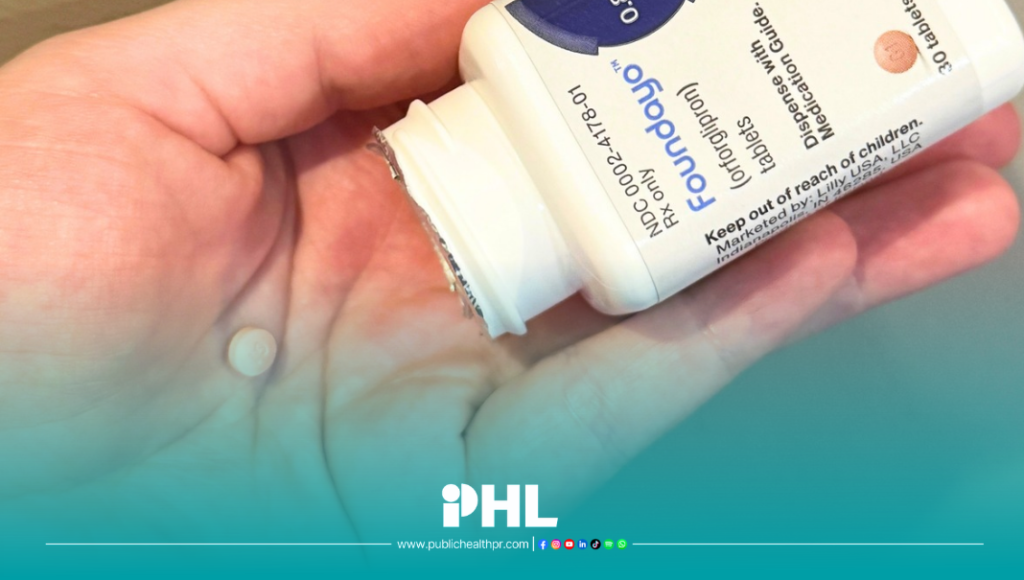
But now, science is obsessed with finding the best weight-loss treatment, and a once-daily pill may be changing that picture for good. Orforglipron, approved by the U.S. FDA in April 2026 under the brand name Foundayo, has produced weight-loss results in large clinical trials that would have sounded unrealistic for a tablet just a few years ago—results once thought possible only with injections.
So, why is an oral GLP-1 such a scientific achievement? How does orforglipron work in the body? What does the evidence show, and what could it mean for the millions of people living with obesity who are afraid of needles or simply cannot afford injections? We tell it all.
What Is a GLP-1 Medication, and Why Does It Matter for Weight Loss?
GLP-1 stands for glucagon-like peptide-1, a hormone your gut releases after you eat. It tells your body to release insulin when blood sugar rises, signals the pancreas to reduce glucagon, slows the emptying of the stomach, and acts on the brain to increase the feeling of fullness.
GLP-1 receptor agonists (GLP-1RAs) imitate this natural signal. By activating the same receptor, they help control blood sugar and reduce appetite, which is why they work both for type 2 diabetes and for chronic weight management. Obesity itself is a complex, multifactorial condition shaped by lifestyle, genetics, medications, medical conditions, gut hormones, and psychological factors. That is why modern treatment is not about willpower alone: biology plays a major role, and GLP-1 medications act directly on that biology.
Why an Oral GLP-1 Is So Surprising?
To understand why a GLP-1 pill is remarkable, it helps to know why the first GLP-1 drugs were injections.
Most established GLP-1 medications are peptides: small chains of amino acids, similar to proteins. When a peptide is swallowed, stomach acid and digestive enzymes break it down before it can reach the bloodstream. That is the same reason insulin is injected rather than taken as a pill.
Scientists did find one workaround. Oral semaglutide (sold as Rybelsus) combines the peptide with an absorption enhancer called SNAC, which helps it cross the gut wall. But it comes with strict rules: it must be taken while fasting, with specific instructions to optimize absorption.
Orforglipron takes a completely different approach. It is a small-molecule, non-peptide drug. Because it is not a peptide, it does not face the same digestive barriers. It was designed to be stable in the gastrointestinal tract, which means it can be dosed orally while still reaching and activating the GLP-1 receptor. It does not need an absorption enhancer, and the approved Foundayo can be taken any time of day without restrictions on food or water, unlike oral semaglutide.
That is the surprise at the heart of this story: a medication that acts on the same pathway as injectable GLP-1s, packaged in a simple daily pill.
How Does Orforglipron Work?
A different kind of GLP-1 receptor agonist
Orforglipron (also known as LY3502970) was developed by Eli Lilly. Cryogenic electron microscopy imaging shows that it binds within the upper helical bundle of the GLP-1 receptor. It acts as a highly potent partial agonist that favors signaling through cyclic AMP (cAMP) over the recruitment of beta-arrestin, a pattern researchers consider relevant to how the drug behaves in the body.
Its elimination half-life is long, roughly 25 to 68 hours, which supports convenient once-daily dosing.
What happens after you take it
When orforglipron binds to the GLP-1 receptor, it sets off a chain of events:
- Insulin release improves. Receptor activation raises cAMP inside pancreatic beta cells, which triggers signaling pathways that lead to insulin release, but in a glucose-dependent manner. This is one reason GLP-1 drugs have a favorable hypoglycemia profile.
- Glucagon is suppressed. Pancreatic alpha cells release less glucagon when blood sugar is high.
- Stomach emptying slows. Food stays in the stomach longer, which improves blood sugar control after meals.
- Appetite decreases. Gut-brain pathways, including the vagus nerve, enhance satiety, so people feel full sooner and for longer.
Together, these effects improve glycemic control and reduce food intake, the two levers that make GLP-1 therapy effective for both diabetes and weight loss.
What Do Clinical Trials Show About Weight Loss?
The strongest evidence comes from ATTAIN-1, a Phase 3, multinational, randomized, double-blind trial published in the New England Journal of Medicine in 2025. It enrolled 3,127 adults with obesity but without diabetes. Participants received orforglipron at 6 mg, 12 mg, or 36 mg once daily, or a placebo, alongside a healthy diet and physical activity, for 72 weeks.
Average weight loss at 72 weeks
- 6 mg: 7.5% body weight reduction
- 12 mg: 8.4% body weight reduction
- 36 mg: 11.2% body weight reduction
- Placebo: 2.1% body weight reduction
All comparisons against placebo were statistically significant.
Lilly’s approval announcement also reports a second way of measuring results. Among participants on the highest dose who stayed on treatment, average weight loss was 12.4% (27.3 pounds), compared with 0.9% (2.2 pounds) on placebo. That figure shows what happens when people keep taking the drug, while the 11.2% above includes everyone randomized, regardless of adherence.
How many people lost 10%, 15%, or 20%?
In the highest-dose group (36 mg):
- 54.6% of participants lost 10% or more of their body weight, versus 12.9% on placebo
- 36.0% lost 15% or more, versus 5.9% on placebo
- 18.4% lost 20% or more, versus 2.8% on placebo
For many people, a 10% reduction in body weight is considered clinically meaningful, and for some, losses of 15% or 20% would have once required surgery to achieve. Seeing those numbers from a daily tablet is what makes this development so notable.
Benefits beyond the scale
Participants taking orforglipron also showed significant improvements in waist circumference, systolic blood pressure, triglycerides, and non-HDL cholesterol compared with placebo. In other words, the benefits extended across several cardiometabolic risk factors, not only body weight.
Orforglipron and Type 2 Diabetes
Orforglipron is also being studied for type 2 diabetes. In the ACHIEVE-1 trial, adults with early type 2 diabetes managed with lifestyle changes alone were treated for 40 weeks. HbA1c, the key marker of long-term blood sugar control, fell by 1.24 to 1.48 percentage points with orforglipron, compared with 0.41 with placebo. Participants also lost between 4.5% and 7.6% of their body weight, no severe hypoglycemia was reported, and average HbA1c levels reached roughly 6.5% to 6.7%.
Side Effects and Safety: What to Know
As with other GLP-1 medications, the most common side effects of orforglipron are gastrointestinal: nausea, diarrhea, constipation, vomiting, and indigestion. In the trials, these were mostly mild to moderate and appeared most often while the dose was being increased.
In ATTAIN-1, adverse events led to treatment discontinuation in 5.3% to 10.3% of participants taking orforglipron, compared with 2.7% on placebo. Across the trials reviewed, serious adverse events were similar between orforglipron and placebo, and the overall safety profile was consistent with that of other GLP-1 receptor agonists.
The FDA-approved label adds several warnings. Foundayo may cause thyroid tumors, including thyroid cancer, and it should not be used by people with a personal or family history of medullary thyroid carcinoma or with Multiple Endocrine Neoplasia syndrome type 2. Other listed risks include pancreatitis, severe stomach problems, dehydration that can affect the kidneys, gallbladder problems, low blood sugar when combined with insulin or sulfonylureas, serious allergic reactions, and food entering the lungs during anesthesia or deep sedation.
The importance of safety signals in this field is illustrated by another oral GLP-1 candidate. Pfizer’s danuglipron program was discontinued in April 2025 after a potential drug-induced liver injury signal and earlier tolerability concerns. That outcome shows why large, long trials and ongoing monitoring matter for every new drug in this class.
Oral GLP-1 vs. Injectable GLP-1: How Do They Compare?
| Feature | Orforglipron (oral) | Oral semaglutide (Rybelsus) | Injectable semaglutide |
|---|---|---|---|
| Type of molecule | Small molecule, non-peptide | Peptide with absorption enhancer (SNAC) | Peptide |
| How it is taken | Once-daily pill | Daily pill, taken fasting with specific instructions | Subcutaneous injection |
| Food and water restrictions | Not required | Required | Not applicable |
| Reported weight loss | About 11.2% at 72 weeks (36 mg, ATTAIN-1) | Not assessed in these sources | About 15% at 68 weeks (STEP-1) |
Two honest caveats belong in any comparison. First, injectable semaglutide reached about 15% average weight loss in the STEP-1 trial, which is higher than the average seen with orforglipron in ATTAIN-1. Second, no head-to-head trials have yet compared the two directly, so differences between studies should be interpreted with care.
The argument for orforglipron is therefore not that it beats every injectable on raw weight loss. It is that it delivers substantial weight loss in a form that is much easier to take, which may help more people start treatment and stay on it.
Why a GLP-1 Pill Could Be Revolutionary for Obesity Treatment
1. Less fear of needles
For people who are afraid of injections, or simply prefer not to self-inject, a pill removes a real barrier to starting treatment.
2. Better adherence potential
Taking one tablet a day is a familiar routine. Orforglipron’s once-daily oral convenience may favor adherence, although this has not been proven in head-to-head trials.
3. Simpler manufacturing and distribution
Because orforglipron is a chemically stable small molecule, it may be simpler to produce than peptide injectables or enhancer-dependent oral peptides. That could ease some of the supply and distribution constraints that have affected injectable GLP-1s. Lower production costs are a class-level expectation for small-molecule drugs, not an established price outcome, so the real impact on cost and access remains to be seen.
Availability and Cost: What to Know About Foundayo
In the United States, Lilly said prescriptions would be accepted immediately through its LillyDirect platform, with home delivery starting April 6, 2026, followed shortly by broad availability through retail pharmacies and telehealth providers.
Outside the United States, Lilly said it has submitted orforglipron for weight management and/or type 2 diabetes in more than 40 countries and plans to launch in each one shortly after approval, so availability depends on each country’s regulator. Orforglipron is also being studied for type 2 diabetes, obstructive sleep apnea, osteoarthritis knee pain, hypertension, peripheral artery disease, and stress urinary incontinence.
Frequently Asked Questions About Oral GLP-1 Pills
Is there a GLP-1 pill for weight loss?
Yes. The FDA approved orforglipron (Foundayo) in April 2026 for adults with obesity, or with overweight and weight-related medical problems. Oral semaglutide (Rybelsus) is another oral GLP-1, used for type 2 diabetes. Availability outside the United States depends on each country’s regulator.
How much weight can you lose with orforglipron?
In the 72-week ATTAIN-1 trial, average weight loss was 7.5%, 8.4%, and 11.2% at the 6 mg, 12 mg, and 36 mg doses, versus 2.1% with placebo. Individual results vary.
Is orforglipron better than Ozempic or Wegovy?
There are no head-to-head trials yet. Injectable semaglutide produced about 15% average weight loss in STEP-1, while orforglipron’s main advantage is oral convenience.
How much does Foundayo cost?
Lilly reports that eligible people with commercial insurance may pay as little as $25 per month, and self-pay prices start at $149 per month for the lowest dose. Prices and coverage can change, so confirm current details.
What are the side effects of oral GLP-1s?
The most common are nausea, diarrhea, constipation, vomiting, and indigestion. They were mostly mild to moderate and occurred mainly during dose escalation.
The Bottom Line
The FDA approval of an effective oral GLP-1 is one of the most significant developments in obesity medicine in recent years. Orforglipron shows that a simple daily pill, with no injections and none of the strict fasting rules of oral semaglutide, can produce meaningful weight loss and improve blood pressure, cholesterol, and blood sugar. It may not match the highest results of the strongest injectables, and long-term data and real-world experience are still needed, but it points toward a future in which effective obesity treatment is easier to start, easier to continue, and easier to reach.
Lilly describes Foundayo as the only GLP-1 pill for weight loss that can be taken any time of day without food or water restrictions. It is a once-daily, small-molecule, non-peptide GLP-1 receptor agonist, and it is Lilly’s second FDA-approved obesity medicine.
This article is for educational purposes only and does not replace professional medical advice. Talk to a qualified healthcare professional before starting or changing any treatment.
Editorial transparency: This article was developed with the assistance of artificial intelligence and was edited by a journalist at Public Health Puerto Rico before publication. All medical information is based on the published sources listed in the references below.
References
- Wharton S, Aronne LJ, Stefanski A, et al. Orforglipron, an Oral Small-Molecule GLP-1 Receptor Agonist for Obesity Treatment (ATTAIN-1). N Engl J Med. 2025;393:1796-1806. DOI: 10.1056/NEJMoa2511774.
- Rosenstock J, Hsia S, Nevarez Ruiz L, et al. Orforglipron, an oral small-molecule GLP-1 receptor agonist, in early type 2 diabetes. N Engl J Med. 2025;393(11). DOI: 10.1056/NEJMoa2505669.
- Wharton S, Blevins T, Connery L, et al. Daily oral GLP-1 receptor agonist orforglipron for adults with obesity. N Engl J Med. 2023;389(10):877-888. DOI: 10.1056/NEJMoa2302392.
- Pratt E, Ma X, Liu R, et al. Orforglipron (LY3502970), a novel, oral non-peptide GLP-1 receptor agonist: a Phase 1a study in healthy participants. Diabetes Obes Metab. 2023;25(9):2634-2641. DOI: 10.1111/dom.15184.
- Zhang J, Wei J, Lai W, et al. Focus on Glucagon-like Peptide-1 Target: Drugs Approved or Designed to Treat Obesity. Int J Mol Sci. 2025;26(4):1651. DOI: 10.3390/ijms26041651.
- Malesu VK. Oral GLP-1 Pills for Weight Loss: How Orforglipron Works. News-Medical.net.
- Eli Lilly and Company. FDA approves Lilly’s Foundayo (orforglipron), the only GLP-1 pill for weight loss that can be taken any time of day without food or water restrictions. News release, April 1, 2026. investor.lilly.com